
As 2026 begins to draw to a close, I have been reflecting on what has been an incredibly full year, both personally and professionally.
Alongside running BounceOT, developing our services and continuing my clinical work, I have also reached several milestones that have encouraged me to think more deeply about my role as an occupational therapist, researcher, business owner and advocate for the profession.
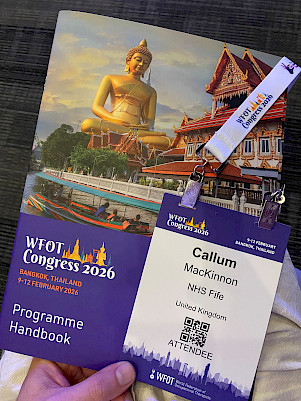
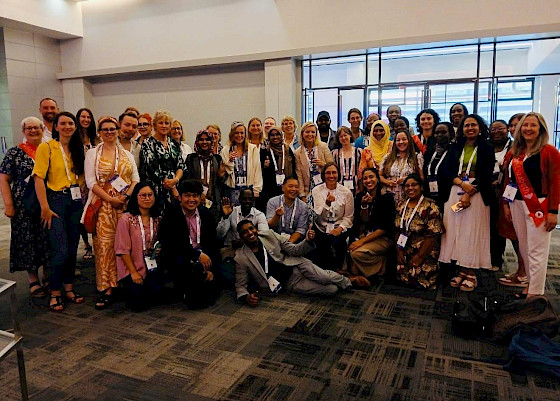
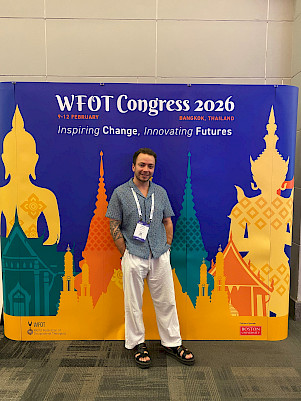
One of the biggest moments came near the beginning of the year, when I travelled from Scotland to Thailand to present at the 19th World Federation of Occupational Therapists Congress, held in Bangkok from 9 to 12 February 2026. The Congress brought together thousands of delegates from across the world to exchange occupational therapy research, practice experience and ideas.
From funding to standing on an international stage
Attending the Congress was made possible through generous support from the Elizabeth Casson Trust, which funded my conference fee, and Fife Health Charity, in partnership with NHS Fife, which supported my flights from Scotland and accommodation in Bangkok.
When I first wrote about receiving this support, I reflected that it represented more than financial assistance. It felt like an endorsement of the importance of engaging with international communities, exchanging ideas and contributing to the continuing development of our profession.
You can read that earlier blog here:
From Fife to Bangkok: Grateful for Fife Health Charity & NHS Fife support
At that point, much of my focus was understandably on preparing for the journey and presentation. Looking back now, what stays with me most is the experience of actually standing in front of an international audience and sharing work that had grown from practice in Scotland.
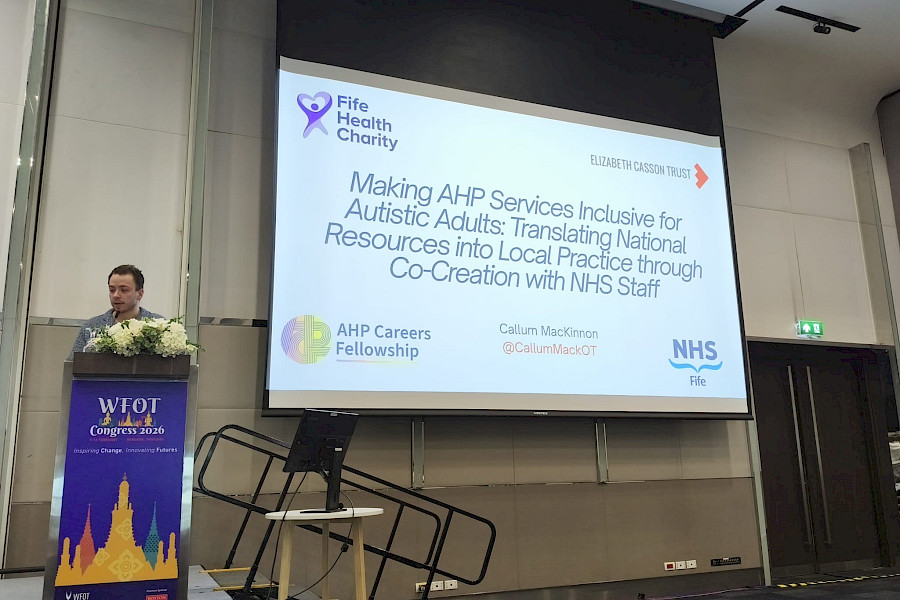
My presentation focused on our AHP Careers Fellowship project, developed collaboratively across NHS Fife and NHS Lothian. The work explored how national resources could be translated into more inclusive local AHP practice through creativity and co-creation with NHS staff, with the aim of improving services for autistic adults.
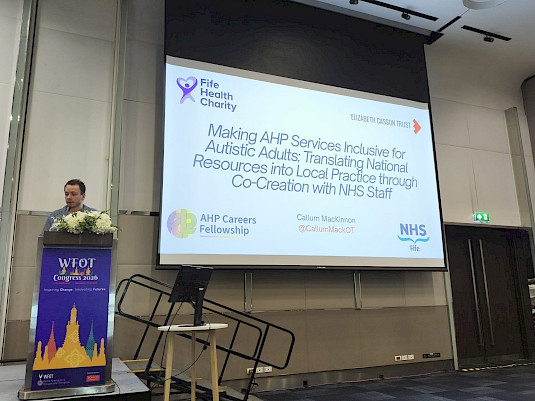
Presenting the project in Bangkok gave the work a platform far beyond its original setting. It was both exciting and daunting to condense a substantial collaborative project into a short presentation, communicate its relevance clearly and invite others to consider how its learning might apply within their own services and countries.
It reminded me that valuable ideas do not need to begin within large academic institutions or major research programmes. They can begin with practitioners, teams and communities identifying barriers, asking better questions and working together to make services more inclusive.
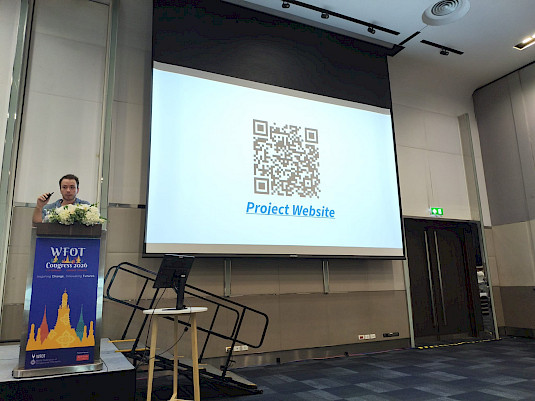
[QR code - to project website. Click here to access the website designed for this project!)
There was something powerful about seeing the breadth of the profession gathered in one place. Although our contexts varied, many of the underlying conversations felt connected: participation, inclusion, identity, social justice, accessibility, meaningful occupation and the challenge of translating evidence into everyday practice.
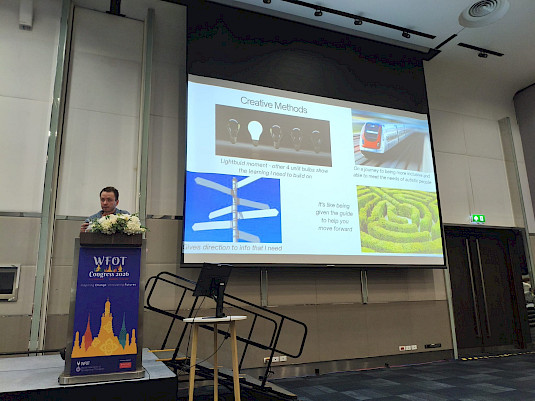
I returned home with new ideas and connections, but also with renewed confidence in the contribution that occupational therapists in Scotland can make to international conversations.
From Congress to publication
The journey did not end with the presentation.
My abstract, titled Making AHP Services Inclusive for Autistic Adults: Translating National Resources into Local Practice through Co-Creation with NHS Staff, was subsequently included in the WFOT Congress 2026 Book of Abstracts, published as a special issue of Cadernos Brasileiros de Terapia Ocupacional / Brazilian Journal of Occupational Therapy.
Seeing the work move from a local fellowship project, to an international presentation, and then into a published record of the Congress has been a real honour. It means that the learning can continue to be accessed and considered beyond the people who were present in the room.
I shared more about the project, its findings and the publication here:
This experience has strengthened my belief that occupational therapists should not underestimate the value of sharing what we are learning. Presenting publicly can feel vulnerable, particularly when the work is still developing, but it allows ideas to be questioned, refined and built upon.
Connecting this experience with BounceOT
The AHP Careers Fellowship project was separate from my role within BounceOT. However, the experience has influenced how I think about the future of the business and my responsibility to communicate the occupational therapy reasoning underpinning our work.
BounceOT has developed through years of practical experience, collaboration, observation and feedback from the people and families we support. We see how movement, play, sensory experience and meaningful activity can create opportunities for confidence, engagement, communication, regulation and participation.
However, seeing value in practice is only one part of the picture. As occupational therapists, we also have a responsibility to examine that practice critically, engage with the evidence and be open about what is known, what remains uncertain and what needs further exploration.
That thinking became central to my MSc dissertation,“Therapeutic use of the trampoline in Occupational Therapy: A Scoping Review,” which I completed and submitted later in 2026. The review mapped how trampoline-based therapeutic activity has been described and used, considered its relevance to occupational therapy, and identified gaps requiring stronger research, guidance and professional discussion. [bounceot.com]
You can read more about that milestone here:
MSc Dissertation Submitted: Exploring the Therapeutic Use of Trampolines in Occupational Therapy [bounceot.com]
Although the Congress presentation and my MSc research focused on different areas, they are connected by a shared theme: taking knowledge developed through real-world practice and making it more visible, shareable and open to critical discussion.
Being public and loud about occupational therapy
Perhaps the greatest impact of presenting at the WFOT Congress has been a growing confidence to be more public and louder about occupational therapy.
By “loud,” I do not simply mean promoting achievements. I mean speaking clearly about what occupational therapy offers, sharing our reasoning, contributing to the evidence base and creating space for honest conversations about innovation, uncertainty and good practice.
Occupational therapy can sometimes be difficult to explain because it is broad, adaptable and deeply shaped by the individual and their environment. That is precisely why we need to keep writing, presenting and finding accessible ways to communicate our work.
For me, this includes talking more openly about:
- the occupational therapy foundations of BounceOT;
- the potential contribution of movement, play and trampoline-based activity;
- the findings and limitations of my MSc research;
- inclusive and neuroaffirming practice;
- co-creation with the people who use and deliver services;
- and the importance of turning local learning into knowledge that others can access.
My hope is that completing my MSc is not the end of the research journey. Instead, I would like it to become a foundation for further writing, collaboration, presentations and future research.
Looking ahead
Presenting in Bangkok was a significant personal achievement, but it has also changed what I believe may be possible next.
I hope to continue sharing the development of BounceOT and my MSc research at future conferences, professional events and other opportunities for learning and exchange. I also want to keep connecting practice with evidence, without losing sight of the creativity, relationships and lived experiences that make occupational therapy meaningful.
There is more work to do. The evidence surrounding trampoline-based therapeutic activity remains developing, and it is important not to make claims beyond what the research can currently support. At the same time, a developing evidence base should encourage careful exploration rather than silence.
The challenge is to hold both curiosity and critical thinking together: to celebrate innovation while asking rigorous questions about safety, purpose, outcomes, accessibility, governance and participation.
As I reflect on 2026, I feel proud that work developed in Scotland was shared on an international stage. I am equally proud to have completed research that is closely connected to the purpose and development of BounceOT.
Most of all, I feel motivated to keep contributing.
To keep sharing.
To keep asking questions.
And to keep being public and loud about the value of occupational therapy.
With thanks
I remain extremely grateful to the Elizabeth Casson Trust, Fife Health Charity and NHS Fife for making my attendance at the WFOT Congress possible.