
When the 2026 National Diversity Awards light up Liverpool’s Anglican Cathedral on Friday, 18 September 2026, the room will be celebrating people who quietly, persistently, and selflessly change lives.
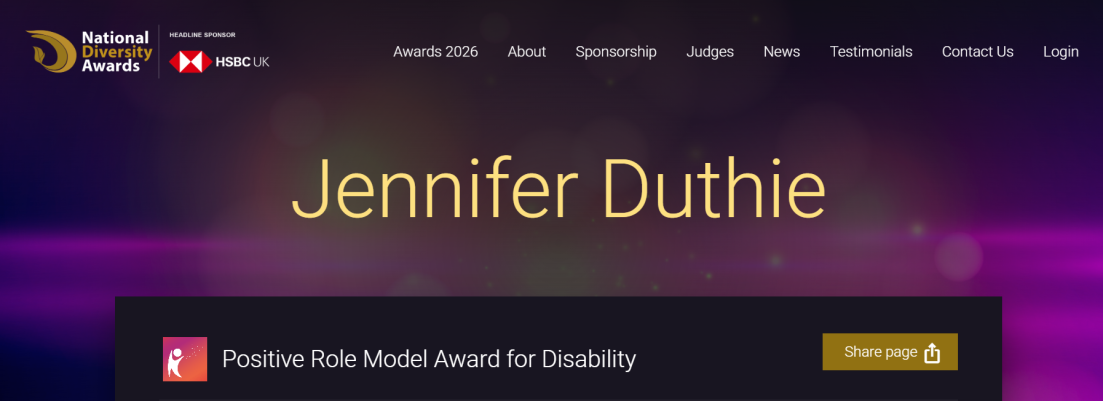
Among those being recognised this year is Jennifer Duthie, nominated for the Positive Role Model Award for Disability. [nationaldi...ards.co.uk]

This award exists for a reason: role models don’t just inspire in theory—they help people believe that progress is possible. The National Diversity Awards describe the Positive Role Model Award as recognising individuals who show selflessness, drive change, and work tirelessly to inspire others.
Jennifer’s story is a powerful example of exactly that—because her work is not rooted in headlines or hype, but in lived experience, love, and the determination to ensure that families raising disabled and neurodivergent children are not left to cope alone.
A life redirected by love
In Jennifer’s own words, everything she does is “rooted in love for my family and in the legacy of my son, Finlay.”
Jennifer trained and worked as a nurse—work she cared deeply about—until her family life demanded a different kind of vocation. When Finlay became unwell, Jennifer stepped away from nursing to care for him full time. It wasn’t simply a change of job; it became an all-consuming commitment shaped by hospital schedules, complex medical needs, and the kind of advocacy that parents learn when the stakes are their child’s life.
Finlay was born with an extremely rare genetic condition—described as a one-of-a-kind variation of HUPRA syndrome, inherited because both Jennifer and her husband were carriers. It led to kidney failure, and before Finlay turned seven he had already experienced dialysis and a renal transplant, alongside the constant clinical monitoring and round-the-clock care that serious renal illness can require.
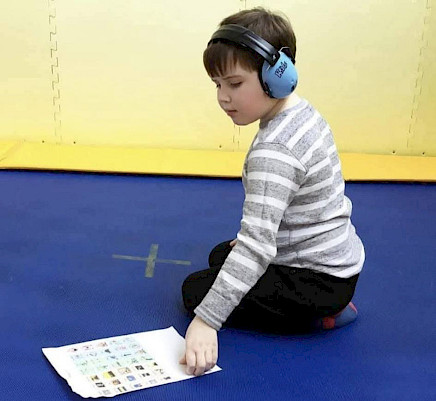
Jennifer describes those years as a balancing act: navigating medical interventions while still creating joyful, meaningful moments—because childhood can’t be put on pause, even when life becomes a sequence of appointments and admissions.
Neurodiversity at home: “Being their mum has shaped everything”
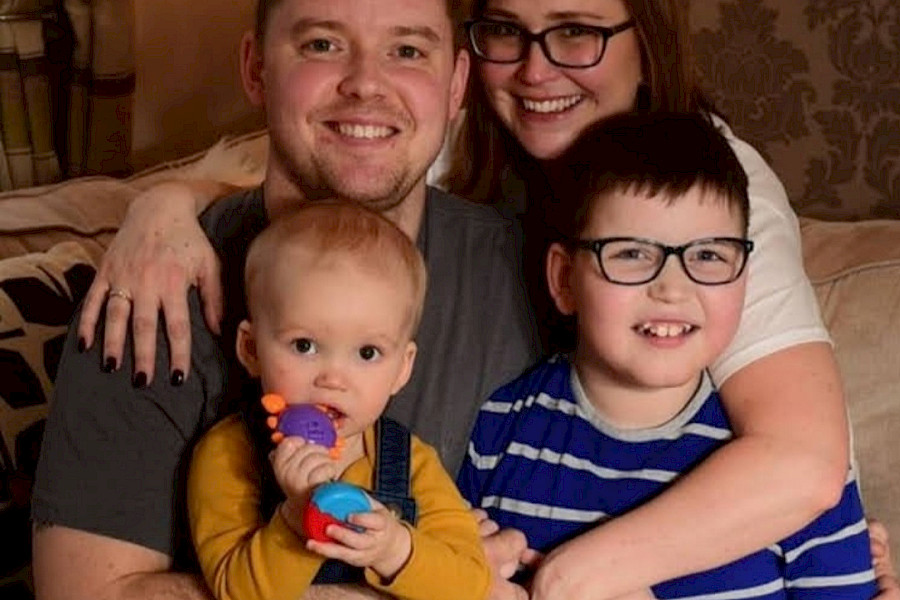
In 2018 Jennifer welcomed her youngest son, Harrison. He was tested early and found to be a carrier of the same condition, but thankfully not affected in the way Finlay was.
Both Finlay and Harrison are autistic, and Jennifer speaks about how motherhood has deepened her understanding of neurodiversity, inclusion, and the urgent need for genuinely supportive environments—not just for children, but for families too. When your daily life includes sensory needs, school pressures, misunderstanding, and the exhaustion of “explaining” your child to systems that don’t always fit, community support stops being a “nice to have.” It becomes essential.
The loss that changed everything — and the promise that followed
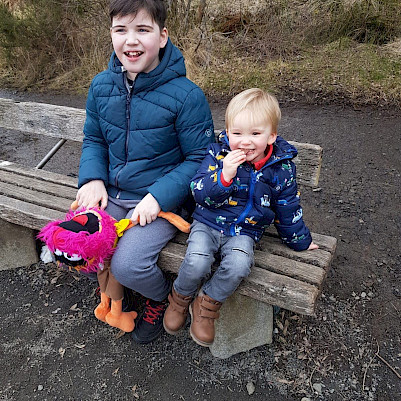
In July 2021, Jennifer’s world changed forever when Finlay passed away suddenly at age 12 from a blood cancer.
There is no neat way to describe the grief of losing a child. But what stands out in Jennifer’s story is what happened next: not a rush to “move on,” but a commitment to carry Finlay forward—to honour him by building something that would help other families survive the hardest days.
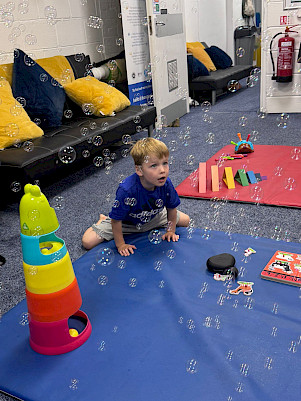
Just two months later, in September 2021, Jennifer created Finlay’s Superstars through her former business, Sensory Tots Stirling. What began as a tribute quickly grew into something bigger: a vital community space where children with additional needs could belong—and where parents and carers could exhale.
Finlay’s Superstars: A space where children can “just be themselves”
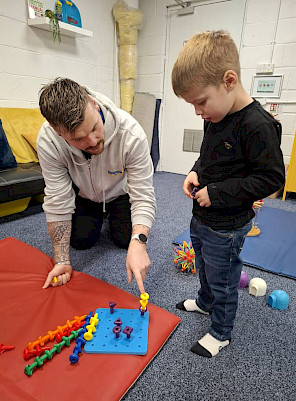
Finlay’s Superstars offers inclusive, sensory-rich sessions designed for neurodivergent children and those with additional needs. Jennifer built it with a simple but radical intention: children should be able to explore, play, regulate, connect—and exist—without pressure, judgement, or being told to “fit” a world that isn’t designed for them.
But the impact doesn’t stop with the children.
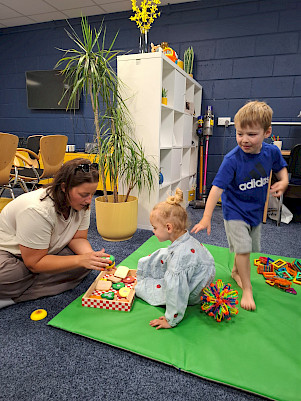
For parents and carers, Finlay’s Superstars is also a lifeline—a place to meet others who understand the reality behind the labels. Jennifer describes it as a space where families can“breathe out, even if only for an hour.” Anyone who has ever carried the invisible weight of advocacy, appointments, and worry knows how powerful that hour can be.
Importantly, Jennifer ran the group voluntarily and fundraised continuously to keep sessions free or heavily subsidised, so cost would never become a barrier to inclusion.
When circumstances change, purpose doesn’t
In 2025, Sensory Tots closed due to the financial climate—a painful moment for Jennifer and the families it served. But while a business can close, a mission doesn’t have to.
From April 2025, Bounce OT—where Jennifer works part time as a Therapeutic Play Leader—took Finlay’s Superstars under its wing. The group could continue, now within an occupational therapy-based service supporting children and adults with additional needs across Stirling.
This matters because it demonstrates something central to Jennifer’s nomination: she is not simply running sessions; she is building sustainable inclusion. When one structure ended, she found another way—so families wouldn’t lose the community they relied on.
Quiet leadership: supporting parents, strengthening systems
Jennifer’s impact also reaches beyond the sessions.
She created a monthly support group for parents of neurodivergent children connected to local schools, including Harrison’s primary school. These spaces are often where the real transformation begins: parents sharing practical strategies, recommending supportive services, and—just as crucially—realising they are not alone.
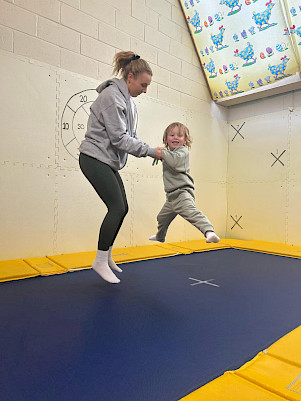
Alongside this community work, Jennifer continues developing her professional practice. In her role at Bounce OT she supports children through therapeutic play, helping build confidence, regulation, and connection. She is also studying an HNC in Occupational Therapy Support, strengthening her knowledge to match her lived experience.
It’s a rare combination: professional skill, personal insight, and the kind of compassion you can’t teach in a textbook.
Why this nomination fits the award — in every sense
The National Diversity Awards were founded to spotlight people and grassroots communities whose work too often goes unrecognised, while empowering and inspiring diverse communities across the UK.
They describe the Positive Role Model Award as celebrating individuals who show selflessness, drive change, and inspire others.
Jennifer’s work embodies that description in a grounded, practical way:
- Selflessness, shown in years of full-time caregiving, and in building support that prioritises families’ access over income.
- Change, created by designing inclusive environments where neurodivergent children are welcomed as they are.
- Inspiration, not through slogans—but through consistent, compassionate action that other parents and practitioners can learn from.
And all of it is done in memory of Finlay: a legacy of love turned into community infrastructure.
The road to Liverpool: key dates for the 2026 Awards
If you’re following Jennifer’s nomination, here are the headline dates the National Diversity Awards have published for 2026:
- Nominations open: 11 March 2026 [nationaldi...ards.co.uk]
- Nominations close: 13 May 2026 [nationaldi...ards.co.uk]
- Shortlist announcement: July 2026 [nationaldi...ards.co.uk]
- Winners announced (ceremony): 18 September 2026, Liverpool Anglican Cathedral [nationaldi...ards.co.uk]
Want to support Jennifer?
Jennifer’s nominee page is here:
Jennifer Duthie — Positive Role Model Award for Disability (NDA 2026): https://www.nationaldiversityawards.co.uk/awards-2026/nominations/jennifer-duthie/ [nationaldi...ards.co.uk]
The main 2026 awards page is here:
https://www.nationaldiversityawards.co.uk/awards-2026/
Closing thought: a role model, in the truest sense
Jennifer Duthie is not asking to be seen as extraordinary. In many ways, she’s simply doing what love demands—turning up, building community, and making sure other families can access understanding and support.
But that is exactly why her nomination matters.
Because in a world where too many parents are left navigating disability and neurodiversity without a map, Jennifer has helped draw one—in memory of Finlay, and in service of every child and carer who needs a place to belong.