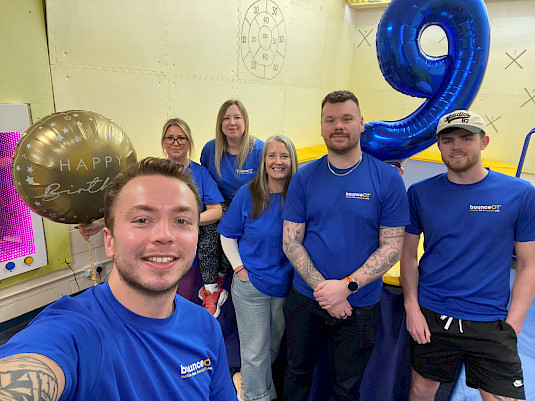

The first year of our two-year Learning, Playing & Thriving Together! project has been full of play, movement, connection and learning.
With support from The National Lottery Community Fund Scotland, we have provided fully funded and reduced-cost therapeutic play opportunities for disabled children, young people and adults, and their families, across the Stirling Council area.
This is our third multi-year National Lottery-funded project and our fourth Lottery-funded project since 2017. However, it is the first to focus exclusively on our closest community in Stirling. This has allowed us to deepen local relationships, respond more closely to what families tell us and develop a genuinely flexible offer around their priorities.
Creating accessible opportunities
During Year 1, we supported 50 new beneficiaries through fully funded therapeutic play, alongside 23 existing local families who continued to access BounceOT at up to 50% below our usual booking cost.
Families could choose how they wanted to use their funded sessions. Some selected one-to-one sessions with a Therapeutic Play Leader, while others preferred private Family Fun Sessions where they could enjoy the playroom together without direct staff facilitation. Many chose a mixture of both.
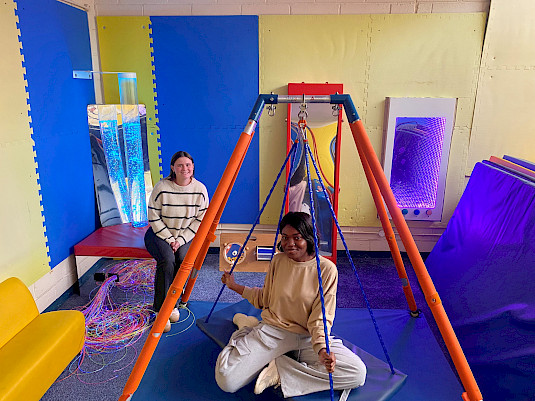
This flexibility has been one of the most important features of the project. Families do not all want or need the same kind of support, and their preferences can change over time.
One parent told us:
“We liked the Play Leader sessions but love having the time just as a family, so we chose to use more Family Fun Sessions.”
When families choose Family Fun Sessions, our staff remain available on site. We carry out regular check-ins and can join part of a session when invited, perhaps to demonstrate a piece of equipment, introduce an activity or play a game requested by a child.
This means support can increase or reduce naturally, without families being required to follow a fixed programme.
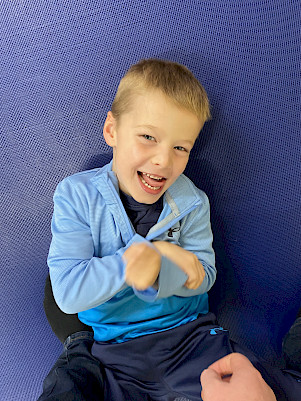
Listening before families arrive
Before booking, families complete an expression-of-interest survey through Microsoft Forms. This gives them an opportunity to tell us:
- what they would like from the project;
- how they would prefer their sessions to be structured;
- what interests and motivates their family member;
- about communication, sensory and physical access requirements;
- what reasonable adjustments may be helpful; and
- whether they are interested in coaching or training.
This helps us prepare in advance and reduces the need for families to repeatedly explain their circumstances. More importantly, it places their knowledge and priorities at the centre of the project from the beginning.
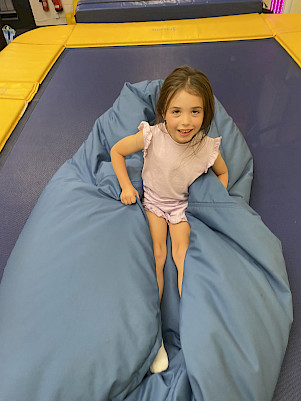
Our staff approach sessions with curiosity. We follow participants’ interests, adapt activities around their preferred ways of communicating and participating, and create opportunities for success without imposing one definition of progress.
The difference families are experiencing
Throughout the year, families have described positive changes in:
- emotional wellbeing and confidence;
- sensory and emotional regulation;
- core strength, balance and coordination;
- communication and social engagement;
- willingness to explore new activities;
- participation in family and community life; and
- relationships and positive experiences shared as a family.
The impact can extend beyond the playroom. Parents have told us that their child is calmer following a session, better able to manage the transition into the weekend or more able to take part in another family activity afterwards.
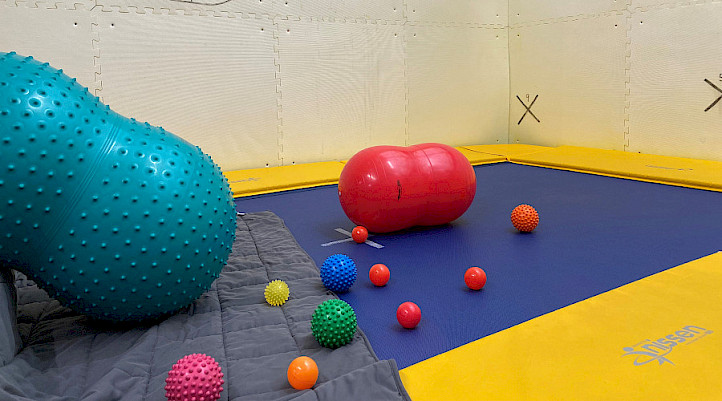
For some parents and carers, a supported session also provides a rare opportunity for respite. They can take a break from their caring responsibilities knowing that their family member is safe, happy and understood.
Families have described BounceOT as their “happy place,” “the highlight of our week” and a “lifeline.”
H’s story
H, aged seven, attended after-school sessions on Fridays. His mum, Jenni, explained:
“After a week of masking and coping, BounceOT helped him feel regulated and ready for the weekend ahead. His Play Leader, Brian, was so patient with him and knew just how to encourage him without overwhelming him.
“For a child who finds a lot of environments challenging, I know this is a space where he feels safe and happy. I have seen a huge improvement in his confidence, both on the trampoline and in general.”
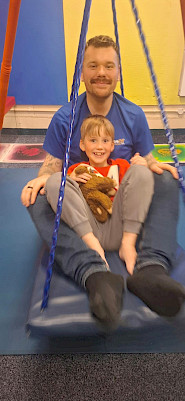
H offered his own review:
“The trampoline is good and bouncy, and Brian is fun!”
H’s experience captures something central to our work. Therapeutic play can support regulation, confidence and physical development, but it should also be enjoyable. Disabled children and adults deserve access to places where they feel safe, accepted and able to have fun on their own terms.
Learning alongside parents and carers
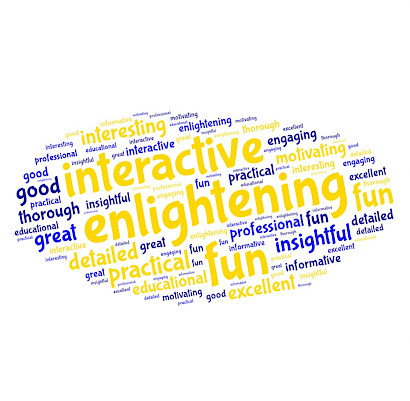
The project originally included an offer of formal Rebound Therapy Training for unpaid carers. Some families have valued this opportunity and reported feeling more confident adapting sensory play and physical activity around their child’s individual needs.
Other carers told us that they did not want to be formally trained. This encouraged us to reflect on what the word “training” might suggest. Some people may imagine an academic or assessment-based course, while others already feel knowledgeable about their child and do not believe that they need formal instruction.
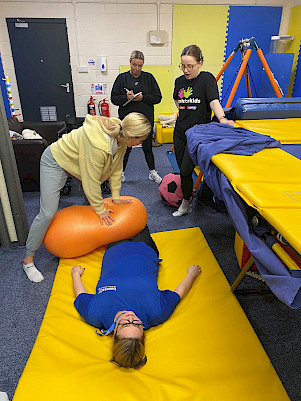
In reality, valuable learning often happens through participation. Parents and carers can explore activities alongside their child, ask questions, observe what works and build on expertise they already hold.
During Year 2, we will make this offer more inclusive by developing different options, including formal training, practical coaching, informal guidance and learning through active participation. We will also review the language we use and monitor whether this increases uptake.
Supporting participation beyond BounceOT
Families continue to encounter barriers in commercial leisure and community activity settings. Disabled people can be restricted or refused access because organisations perceive them as a risk, lack confidence in making adaptations or believe that specialist training is always required.
Although training and certification may help individual families navigate these barriers, we do not believe disabled people should have to prove that they are suitable for inclusion.
This learning has highlighted a wider role for BounceOT. Alongside providing a safe and inclusive space ourselves, we want to support other organisations to understand:
- the benefits of inclusive physical activity;
- how play and movement can be adapted;
- how to work alongside families;
- how to approach risk proportionately; and
- how to create environments where disabled people are welcomed.
This will inform our health-promotion and partnership work during Year 2.
Working with our community
Our relationships with schools, nurseries, health visitors, social work, education teams, charities and community organisations continue to grow. Partners can refer, make enquiries, arrange sessions or share information directly with families.
No specific diagnosis is required to access BounceOT, and families do not need to navigate a lengthy waiting-list process before contacting us.
We have also strengthened relationships with universities and colleges. Undergraduate and postgraduate students join us through credited BSc and MSc placements, which provide our main source of volunteers. Students contribute to sessions, resources, research and evaluation while gaining practical experience of inclusive, strengths-based and neurodiversity-affirming practice.
These placements help develop the future workforce while bringing new ideas and additional capacity into BounceOT.
Strengthening the evidence behind our work
This year, our Founder and Specialist Occupational Therapist, Callum MacKinnon, completed his MSc in Advancing Practice in Occupational Therapy at Queen Margaret University.
His 12,000-word dissertation, awarded a B grade, involved clinical research into the therapeutic use of the trampoline through an occupational therapy lens. The subject relates directly to the core work undertaken at BounceOT.
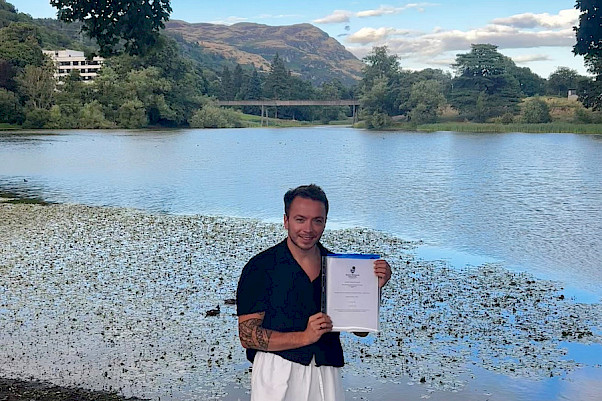
This research will provide a foundation for continued staff training, clinical supervision and reflective practice. It will also inform our Universal, Targeted and Specialist service model, family coaching, health-promotion activity and approach to measuring meaningful outcomes.
Callum plans to share the learning through accessible blogs, conference presentations and potential professional or academic publications. Our aim is to contribute to a wider understanding of how trampolining, play and movement can be used purposefully while remaining enjoyable, inclusive and centred on the individual.
Looking towards Year 2
Year 1 has reinforced that accessibility is about much more than removing cost. It also requires choice, flexibility, accessible communication, trusted relationships and a willingness to listen and adapt.
During Year 2, we will:
- continue offering flexible Play Leader and Family Fun Sessions;
- develop a more inclusive coaching and training offer;
- strengthen check-ins and outcome monitoring;
- expand health-promotion work around inclusive activity;
- continue building statutory, community and academic partnerships;
- provide regular clinical supervision and reflective opportunities for staff; and
- explore unmet demand across the wider Forth Valley area without reducing our commitment to Stirling families.
We have also introduced gift cards and a sponsorship model, allowing people and organisations to purchase sessions for someone else. A trial discount proved particularly popular with families of younger children who were not yet connected with social work services or eligible for other funding. This highlighted the need for affordable support before families reach the threshold for formal intervention.
We are incredibly grateful to The National Lottery Community Fund Scotland and to every participant, family, staff member, volunteer, student and partner who has contributed to the first year of Learning, Playing & Thriving Together!
Most of all, we are grateful to the families who continue to trust us, share their experiences and help shape BounceOT. Their insight keeps us learning, adapting and working towards a community in which everyone has meaningful opportunities to play, participate and thrive.