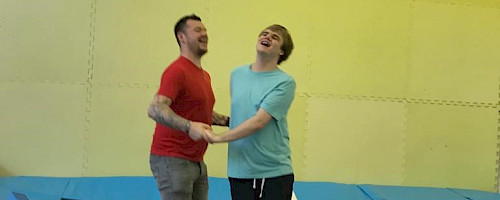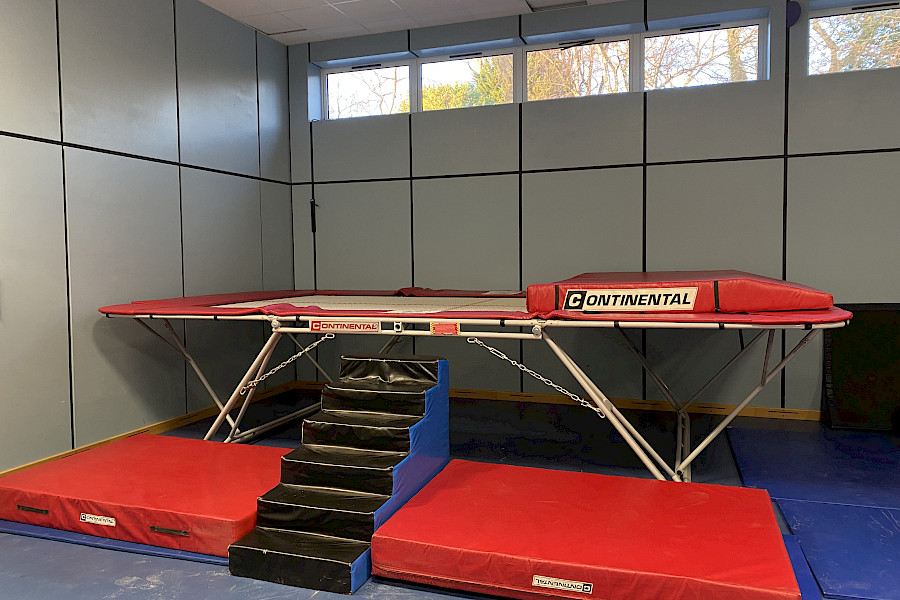

The BounceOT team delivered a full‑day Rebound Therapy training for 30 education staff across Cedars Academy Trust in Gateshead—refreshing existing confidence and upskilling new team members to deliver safe, meaningful, and joyful trampoline‑based therapy for their learners.
The best bits for me…
“Learning new games—useful ways to end a session if pupils need a finishing/calming activity.”Teacher

Why Cedars invited us
Cedars Academy Trust reached out after seeing our training offer on the BounceOT website. Their leadership wanted a refresher for colleagues trained years ago and a comprehensive introduction for newer staff. We designed the day to meet both needs—balancing purpose and practice, with space to update safety knowledge, strengthen clinical reasoning, and build confidence through hands‑on facilitation.
“Thank you very much for delivering the Bounce OT training. The staff really appreciated it and found it extremely helpful and engaging.”
About Cedars Academy Trust
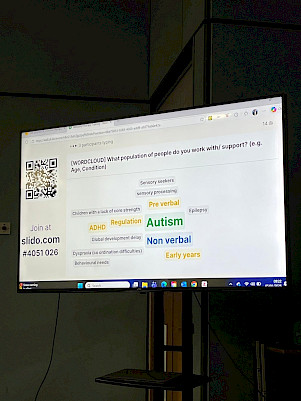
Cedars Academy Trust provides specialist education across two sites in Gateshead—supporting children and young people with a wide range of needs, including physical, sensory and medical conditions, speech, language and communication disorders, autism, and complex learning needs. Their purpose—to nurture, inspire, and prepare every learner to thrive, fit for life in body and mind—aligns closely with our practice values at BounceOT.
Our approach: bespoke, trademarked™, and evidence‑based
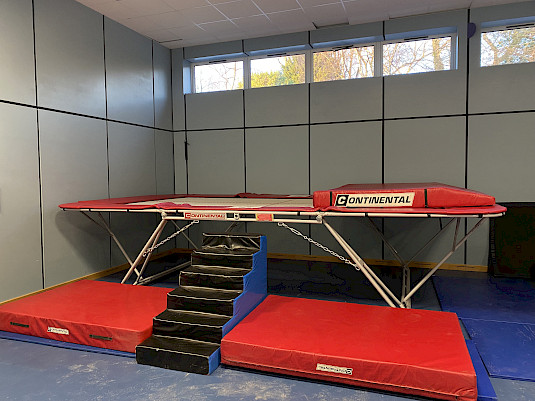
At BounceOT, we use a bespoke, trademarked, and evidence‑based training model that has evolved over a decade of Occupational Therapy practice. We focus on the therapeutic use of the trampoline—commonly known as “Rebound Therapy” in the UK—which is distinct from gymnastic trampolining. It’s one of many tools in a wider therapeutic programme across Occupational Therapy, Physiotherapy, and Education.
There is no single UK governing body for Rebound Therapy.
Our model is therefore quality‑assured and profession‑informed, aligning with RCOT/CSP‑relevant guidance and local policy, and paired with free follow‑up support (on‑site mentoring, online supervision, reflective groups) to help teams embed learning into daily practice.
Co‑designing the day with Cedars
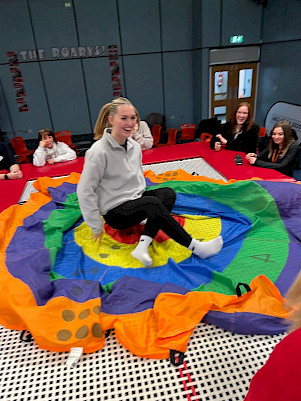
Ahead of the session, we tailored content to Cedars’ context—staff roles, equipment, learner profiles, and timetables. The day:
- Refreshed core knowledge for experienced practitioners and onboarded new colleagues with structured learning.
- Centred safety, consent, communication, and dignity at every step.
- Emphasised clinical reasoning—why we choose specific movements, rhythms, and intensities for individual learners.
- Linked practice to functional outcomes (attention, regulation, postural control, movement quality, communication, engagement, and enjoyment).
What we covered (and why it matters)
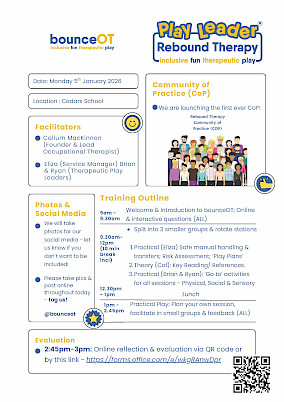
1) Foundations and safety
- Indications, contraindications, and medical red flags
- Equipment set‑up, spotter roles, environment checks, documentation
- Risk assessment and dynamic risk management
2) Therapeutic frameworks
- Postural profiles and movement analysis
- Co‑regulation, arousal modulation, and sensory processing
- Goal‑setting and outcome tracking that fits busy school days
3) Practical facilitation
- Rhythm, timing, graded intensity (how/when to adjust)
- Adapting sessions for learners with complex physical needs
- Working in pairs/teams with clear communication
4) Embedding in the timetable
- Short, purposeful sessions and why they help many learners
- Carry‑over into class, therapy, and home
- Recording what matters to the learner (not just paperwork)
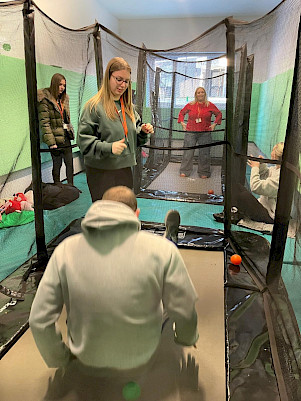
Evaluation highlights: What participants told us
In a few words—how was your experience today?
“Good, interesting and fun” • “Very informative” • “Really positive” • “Interesting and beneficial” • “Insightful” • “Excellent” • “Beneficial”
After the training, I feel more confident with…
- Manual handling of the trampoline and safe team roles
- Using the hoist to transfer on/off safely and smoothly
- Understanding & writing safety rules that are clear and usable
- Risk assessing the environment and using dynamic risk management
- Developing risk assessments for service users that reflect individual needs
- Writing notes about sessions that capture outcomes and next steps
- Understanding the physical, social/communication, and sensory/regulation benefits of trampoline‑based therapy
- Accessing evidence‑based information about rebound therapy
- Ways to play on the trampoline and having games to use within sessions
- Adapting sessions for different individuals and goals
The best bits for me… (participant reflections)
- “Seeing all the different activities you can do on the trampoline and how they benefit the children.”
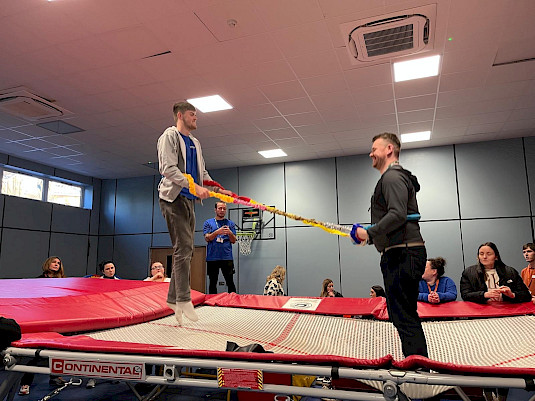
- “Trying the big trampoline and exploring different games and methods.”
- “Learning new games—useful ways to end a session if pupils need a finishing/calming activity.”
- “New techniques and games to play for regulation.”
- “Insights on creative ways to play on the trampoline.”
- “Seeing other people’s ideas and how we can adapt to suit individuals.”
- “Learning how to use slight vibrations to support a child’s bounce instead of bouncing myself.”
What this tells us:
Participants valued the practicality of the day (games, adaptations, endings), the why behind the how (clinical reasoning for regulation and progression), and confidence in safety (hoist use, team roles, rules, and risk). The emphasis on creative yet purposeful play—including subtle facilitation techniques like graded vibration—resonated strongly.
Early impact and what we’ll build on
By close, staff described greater confidence, shared language around safety and regulation, and a stronger sense of team facilitation.
Going forward, we’ll continue to:
- Expand the game bank (regulation, communication, postural aims, endings/cool‑downs).
- Provide quick‑reference prompts for risk checks, goal setting, and note‑writing.
- Offer follow‑up coaching (on‑site or online) to embed routines into timetables.
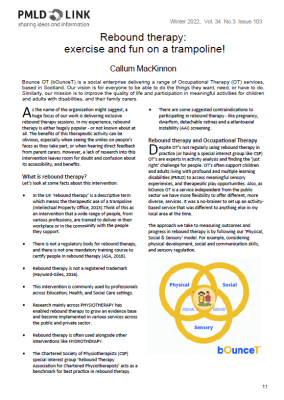
- Share routes to evidence (RCOT & CSP‑aligned resources, our PMLD Link article, and Callum's MSc Advancing Practice in Occupational Therapy dissertation scoping review updates).
A note on terminology
In the UK, “Rebound Therapy” describes the therapeutic use of the trampoline across OT, PT, and Education. It’s not a regulated profession, and there is no single organisation you must use for training. That’s why our focus is on a profession‑informed, quality‑assured model with robust safety practices and ongoing supervision—so teams can deliver therapy that is safe, purposeful, and person‑centred.
Thank you, Cedars :)
A huge thank you to the Cedars Academy Trust team for the warm welcome and your commitment to inclusion, equality, and great outcomes for learners. It was a privilege to learn alongside you.
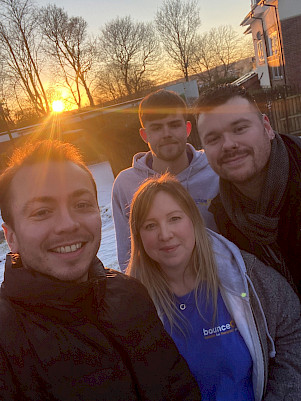
Interested in training for your team?
We deliver on‑site Rebound Therapy training across the UK, plus open courses at BounceOT HQ in Stirling. We aim to be competitive on cost, content, duration, and follow‑up support:
- £250 per person (1–4 people)
- £200 per person (5+ people)
- £180 per person (10+ people)
- £150 per person for 20+ (group discount)
We tailor each day to your setting, and we include free follow‑up support to help you put learning into practice.
Learn more and book: bounceot.com/services/rebound-therapy-training
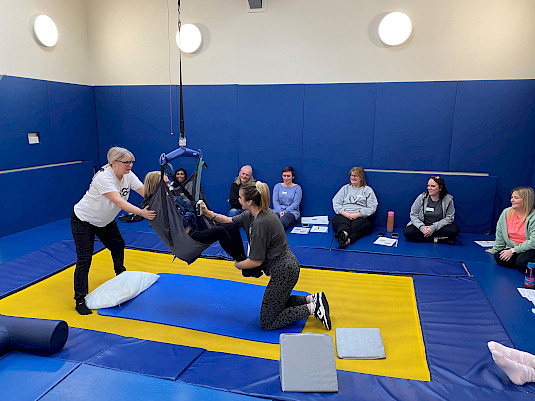
Further reading from BounceOT
- PMLD Link (MacKinnon, 2022): Rebound Therapy—exercise and fun on a trampoline
- MSc dissertation - Scoping review protocol (Open Science Framework): Therapeutic Use of the Trampoline in Occupational Therapy (MacKinnon, 2025)
- CSP (2016) Safe Practice in Rebound Therapy embedded throughout our training